
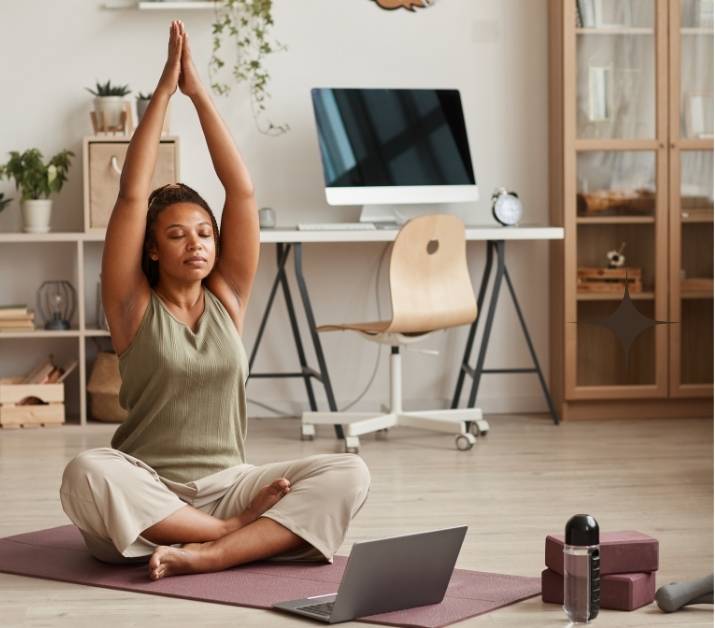
Cultivating Your Home Yoga Practice
If you have ever attended a weekly yoga lesson, you will know that it if it happens regularly enough, going to class becomes a positive routine in your life. But starting a home yoga practice, when there’s no scheduled class to show up to, requires a lot more motivation. There is nobody checking that you have arrived and done your practice. It becomes your own responsibility.
Investing in your home practice is a big shift and initially it might feel difficult to build up a routine. When we understand how we humans tick, it’s all about forming positive habits through regular repetition. In my opinion it doesn’t actually matter how much time we spend practising, as long as it is regular. Then things gain their own momentum.
Most Eastern spiritual and physical practices emphasise self-discipline. When we learn a martial art or yoga, we are not just learning a set of movements, but also a way of thinking, while developing self-discipline and motivation. It’s all part of becoming a yogi in your own right and taking that step to become less dependent on the teacher and more self-directed.
Here are some tips that I was given when I started practising yoga at home all those years ago and that have kept my home yoga practice flourishing to the present day.
- Schedule a time and stick to it
Have a look at your daily routine and work out where your yoga practice could fit in. Early morning is ideal as it is a quiet time with minimal disturbances. The mind is alert, yet calm in the morning – in a receptive state for yoga. If you are not a morning person, perhaps a lunchtime practice could fit into a busy day? Or choose a gentle evening session to release the day’s accumulated tension and ease your way into a restful night’s sleep.
Keep in mind that yoga is best practised on an empty stomach. If you have low blood sugar, it is fine to have a fruit or light snack before starting. The time you choose will also depend on your family situation or others that you live with. You will need to find a time when you can be quiet and alone, especially if you have young children. Whatever you choose, commit to it. Try to repeat your practice at this same time on a regular basis.
2. Set aside a suitable yoga space
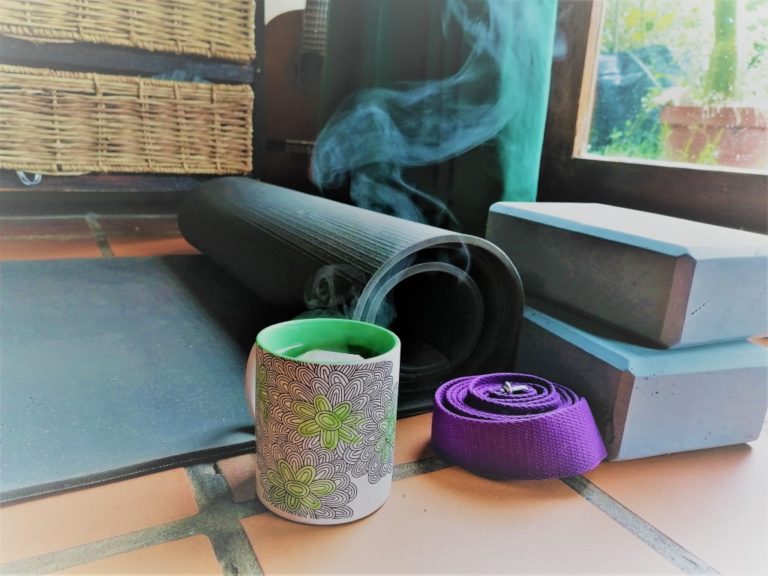
It might be in on an outside deck, or in a corner of the garden, but it’s recommended to practice yoga in a shaded space. Direct sunlight can cause dehydration and make your practice feel way too strenuous. People love the idea of beach yoga, but practically it only works under shade or when the sun is low. B.K.S Iyengar recommended practising yoga in a ‘clean, airy space, free from insects and noise.’ Whether you are practising yoga indoors or outdoors, have your yoga mat and props nearby so you can find them easily without wasting time.
Indoors, you may need to rearrange your furniture. Once I started practising yoga I always set up my living room with enough carpet space for one or two yoga mats. Its good inspiration to de-clutter your home. Warmth is important in a cold climate, so have a heater or fireplace nearby in winter, and make sure there is fresh air coming in somewhere. It really helps to have an inspiring view of something natural like an open field, the ocean or even just a tree in your garden.
3. Practice is not negotiable
Once you have set a designated day to practice on, keep it regular. You will find that in the beginning all kinds of excuses will pop up, like: ‘I am too tired today, I didn’t sleep well, I have too much work to do, I have visitors, I am too emotional’ and many more. Ignore the excuses. Instead, just acknowledge them for what they are and show up on your mat. If you are tired or achey, just modify your practice to suit how you feel. A gentle lying down session or just 20 minutes of breathing can be extremely helpful in those cases. If you are emotional, this could be the perfect opportunity to channel your emotions into your yoga, or to allow them to release within a safe space. The only time that I don’t practice my yoga is when I am sick or travelling early on that day.
Never entertain the illusion that your yoga practice is an indulgence. Giving yourself this essential me-time will greatly enhance your wellness on all levels and improve your relationships with others.
4. Less is more
My teachers always told me it was better to practice 20 minutes daily than an hour sporadically. You will see when you commit to a regular practice that wonderful things begin to happen. Sit, or lie on your back with knees bent and feet flat on the floor and just breathe for five to ten minutes. Start simply with that, and see where it leads you.
5. Find someone to cheer you on
Look for a friend who is also practising something at home – not necessarily yoga (it might be a fitness workout, Tai Chi or trail-running) and give each other some encouragement. Check in regularly and discuss any challenges that arise. Support could also take the form of a chat group of fellow yoga students on social media, to remind you that there are others walking this path beside you. Alternatively, keep a practice diary by noting down how you felt before, during and after your practice and any thoughts or emotions that came up.
“In the beginning you have to make room for yoga in your daily life, and give it the space it deserves. But after some time yoga itself will pull you up by the hair and make you do it.” – Vanda Scaravelli