
Blog
Why Choose Yoga?
I was intrigued when Vanessa, my friend and student, posed this question. Pondering it began to feel like unfolding an intricate origami shape. This was something I hadn’t thought about, simply because I did choose yoga, at a young age. But why yoga?
For my nineteen-year old self, yoga was a way to focus and calm my ever-wandering mind. It was the first eastern practice that I learnt and I could sense that, not only was this different to anything I had been taught during my education so far, but it was practical and it worked.
I have my mother, Aggie, to thank for an early introduction to yoga. During my primary school years, she practised hatha yoga at home in the early mornings, with the guidance of a book. Aggie had studied philosophy as one of her university courses and had a very enquiring mind. At that stage she immersed herself in books linking quantum physics and eastern spirituality, as well as going through a Zen phase when she baffled our young minds with unsolvable koans like: “what is the sound of one hand clapping?”
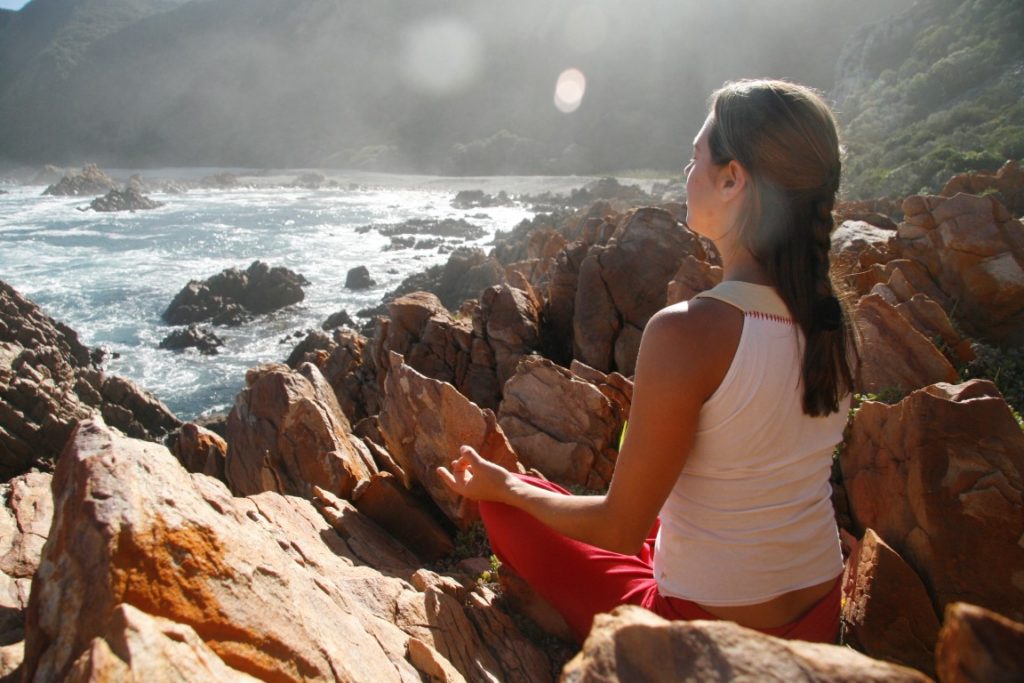
So when I chose to attend my first yoga class (around the corner from where we were living at the time on the fringes of Regent’s Park in London), I knew, to an extent, what to expect. I was familiar with some poses, and I was lucky that my teacher taught pranayama in our lessons right from the start. These breathing techniques, the original and ancient breathwork, were incredibly useful and effective for me. I was a teenager trying to study, in a city full of distraction. Full of clubs, pubs, parties, festivals and forbidden substances, while my mother had been treated for breast cancer. When it all became too overwhelming, I could sit on my bed and practise alternate nostril breathing. The breathing techniques I learnt at those first yoga lessons helped me to absorb myself completely in the present moment. They improved my concentration.
Being a person who had never been good at sitting still for long, what got me hooked on yoga back then was the combination of movement and the breath. It felt like the magic formula.
I could channel my restless energy into something healthy while feeling the therapeutic benefit of breathing well.
Then why do my students choose yoga, I wonder?
Some might wish to give themselves the gift of self-care and find sanctuary in a safe space. In lives loaded with responsibility and duty, a yoga class provides the chance (and offers permission) to venture inward towards stillness, even just for a while.
Some students, especially those athletic ones who do a lot of sport or exercise, would like to learn to become gentler and kinder to themselves. They are seeking equilibrium, wanting to down-regulate their often fired-up nervous systems and to tune into the subtleties of their own bodies.
A big shift for these sporty students is replacing the tendency to give the body orders with a sensitivity to its needs instead.
Although initially beginners might think yoga is about the poses, they eventually discover it’s not. Poses are the focus of our awareness, something to yoke the mind to. But what do we actually learn when practising a challenging pose, when asking the body to perform something seemingly impossible? We might learn patience, tenacity – or humility as we collapse in a heap. We might feel terrified and then reap the rewards of stepping out of our comfort zones and facing those fears. Perhaps, through this journey, we even experience a transformative emotional release or realisation.
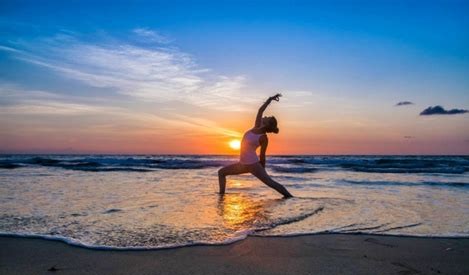
Although it’s possible, I don’t know how often this type of thing happens when attending tennis lessons or working out at the gym. In yoga, it happens a lot. Because yoga welcomes and encourages the involvement of the whole being, including our thoughts, memories and emotions.
The slow, contemplative pace of yoga allows time for thoughts to bubble up from our subconscious depths or for memories stored in the body to emerge.
Not only that, but we are able to feel those impressions, to be with them, observing without reacting. This technique is often used in meditation.
The meditative aspect of yoga has a ripple effect as it filters out into life – into our relationships, our work and interactions, awakening new potential for understanding and compassion in our dealings with others.
When we return to yoga again over weeks and months, the benefits of the practice are repeatedly impressed into us. Learning how to practice without pushing ourselves can be a revelation. We pause, we explore, trying different routes and approaches.
As we develop our mental flexibility, the physical flexibility comes too. And as we shape and alter the body through practice, so we shape our consciousness.
We can choose yoga in order to slow down, to opt out of a worldview based on ambition and achievement. We can choose to shift our awareness from the external and the appearance (where are the mirrors in the yoga studio?) to the internal. Put simply: Yoga gives us a break – time to enjoy purely being in our bodies, breathing and moving.
Why did you choose yoga?
I would love to hear about some of your experiences.